How Many Days a Year Can You Use It? Artificial Grass for Schools and Dog Owners
Usable days, drainage time and upkeep hours: simple numbers that show what artificial grass changes in a playground or dog garden.
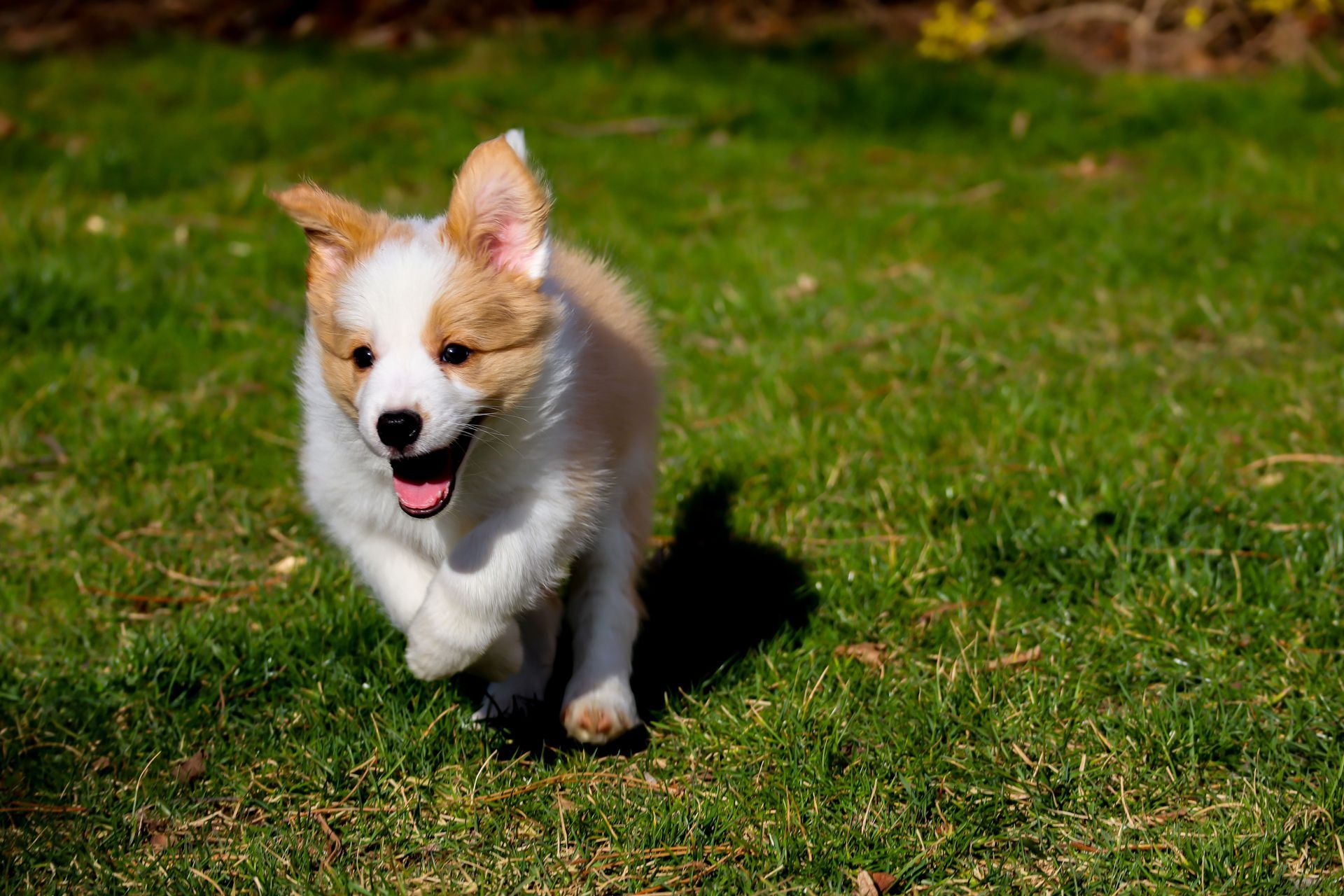
When a school or a dog owner is weighing up artificial grass, the conversation usually starts with price and appearance. A more useful question is simpler: how many more days a year will the space actually be usable? It is easy to measure, it is easy to compare before and after, and it gets to the heart of why people make the switch in the first place.
Why usable days matter
A grass field or garden that is waterlogged, muddy or worn bare is effectively out of action. In a wet British winter, that can mean weeks at a time when children are kept on the hard playground and dogs come in caked in mud after every trip outside. A well-installed artificial surface with a free-draining base can usually be used soon after the rain stops, so the number of lost days falls sharply.
Usable days are also a fair way to judge an installation. Two lawns can look identical on the day they are finished, but the one with the better groundwork will keep draining properly for years, while the other starts to puddle and smell. Recording a few simple numbers makes that difference visible.
Measuring it at a school or nursery
Most schools already know, at least roughly, how often the field is closed. Writing it down turns that into something you can compare.
- Days closed due to wet ground per half term, before and after the new surface
- Time from the end of heavy rain to the surface being usable again
- Staff time spent on upkeep each week, such as raking bark or clearing mud from corridors
- Top-up and replacement costs for loose materials such as bark or wood chippings
- Repairs needed to edges, seams or shock pads each year
These figures are also useful when talking to an installer. If you are looking at school and nursery artificial grass in Reading, share what you have recorded and ask how the proposed sub-base and shock padding will improve each figure.
Measuring it at home with a dog
For dog owners, the numbers are more personal but just as easy to keep. A note on the calendar is enough.
- Muddy-paw days: how often your dog comes in needing a wash
- Lawn repairs: time and money spent reseeding bare patches or filling holes
- Cleaning routine: how often the surface needs rinsing to stay fresh
- Drainage: whether water disappears within a few minutes of rinsing or sits on the surface
The drainage check is the one to watch over time. If it starts to slow down, the problem is usually in the base or the infill rather than the grass itself. When comparing quotes for artificial grass for pets in Reading, ask how the installer will keep urine draining freely, because that is what keeps the surface usable and odour-free.
What drives the numbers
Almost every figure above comes back to the same few decisions made during installation: how deep the excavation goes, what the sub-base is made of, whether the membrane is fully permeable, whether sand infill is used, and how the edges are fixed. Play areas add shock padding under equipment to the list. Getting these right does more for usable days than any choice of grass colour or pile height.
Keep it simple
- Pick three or four measures that matter most to you.
- Record a baseline for at least one season before the work starts, if you can.
- Keep recording afterwards using the same method.
- Review once a year and share the results with your installer if anything starts to slip.
A short list of numbers kept consistently will tell you more than any brochure. For more on comparing outdoor projects, see our landscapers category.
More Posts, Facts, Tools & Charts